What to Eat Before and After a Workout for Best Results (Complete Nutrition Guide)
Introduction
Exercise alone is not enough to achieve the best fitness results. What you eat before and after your workout plays a critical role in how your body performs, recovers, and transforms over time. Many people train consistently but still struggle with low energy, slow muscle growth, or poor recovery simply because their nutrition timing is not aligned with their workouts.
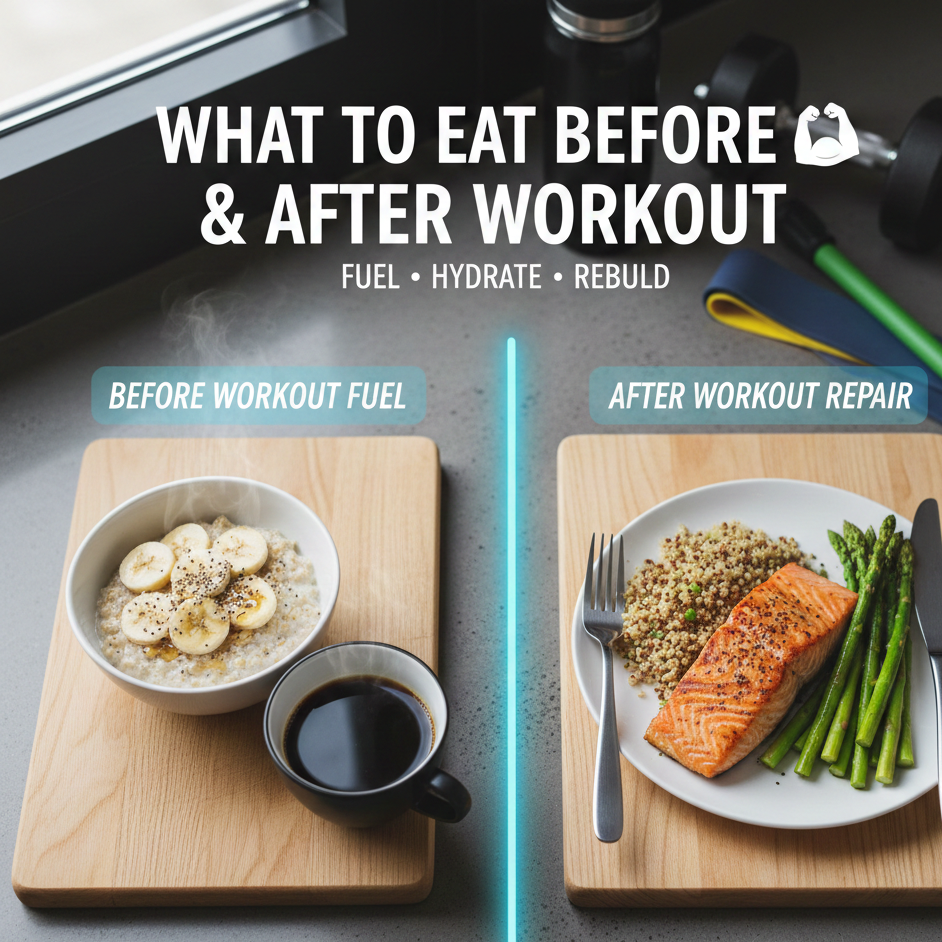
Pre-workout meals provide the fuel your body needs to perform exercises effectively, while post-workout meals help repair muscles, restore energy levels, and support long-term progress. Understanding what to eat, when to eat, and why it matters can make a noticeable difference in your fitness journey.
This guide explains pre- and post-workout nutrition in detail, using simple language and scientifically supported information, so you can make better food choices and get the most out of every workout.
Why Pre- and Post-Workout Nutrition Matters
When you work out, your body uses stored energy to power muscle contractions. At the same time, muscle fibers experience microscopic damage, especially during strength training. Nutrition helps manage both of these processes.
Eating the right foods before a workout ensures that your body has enough energy to train effectively without fatigue or dizziness. Eating the right foods after a workout helps repair muscle tissue, replenish energy stores, and prepare your body for the next training session.
Ignoring workout nutrition can lead to slower progress, poor performance, increased muscle soreness, and higher risk of injury over time.
Understanding How the Body Uses Food During Exercise
Food is broken down into macronutrients: carbohydrates, proteins, and fats. Each plays a different role during exercise.
Carbohydrates are the body’s primary energy source during workouts. They are stored as glycogen in muscles and the liver. During exercise, especially high-intensity workouts, your body relies heavily on glycogen for fuel.
Protein supports muscle repair and growth. While protein is not a major energy source during exercise, it becomes crucial after training to help muscles recover and adapt.
Fats provide energy during low-intensity and long-duration activities. However, they digest slowly and are not ideal as a primary fuel source immediately before intense workouts.
Understanding this balance helps determine what foods are best before and after exercise.
What to Eat Before a Workout
The goal of a pre-workout meal is to provide energy, improve performance, and prevent muscle breakdown. The right meal helps you train harder and longer without discomfort.
Timing of Pre-Workout Meals
The timing of your pre-workout meal matters as much as the food itself. A full meal should be eaten about two to three hours before exercise, while a lighter snack can be eaten thirty to sixty minutes before a workout.
Eating too close to a workout can cause stomach discomfort, while eating too early may leave you feeling low on energy.
Ideal Nutrients Before a Workout
Before a workout, your body benefits most from carbohydrates combined with a moderate amount of protein.
Carbohydrates provide immediate energy and help maintain blood sugar levels during exercise. Protein helps reduce muscle breakdown and supports muscle preservation.
Fat intake before workouts should be limited because fats slow digestion and may cause discomfort during intense activity.
Carbohydrates Before a Workout
Carbohydrates are the most important nutrient before training. They help fill muscle glycogen stores, which improves endurance, strength, and overall workout quality.
Consuming enough carbohydrates before exercise can help prevent early fatigue, dizziness, and weakness, especially during long or intense sessions.
Good carbohydrate choices before a workout include foods that digest easily and provide steady energy without causing bloating.
Protein Before a Workout
Protein before a workout helps reduce muscle protein breakdown and supports muscle maintenance. While protein does not directly provide energy, it plays a protective role for muscle tissue.
A small to moderate amount of protein before training is enough. Large amounts are unnecessary and may slow digestion.
Fat Intake Before a Workout
Fat digestion is slow, which makes high-fat foods less suitable before training. While small amounts of fat are not harmful, they should not dominate a pre-workout meal.
For people training early in the morning or doing low-intensity workouts, fat intake before exercise may be more flexible.
Hydration Before a Workout
Hydration is often overlooked but is essential for performance. Even mild dehydration can reduce strength, endurance, and focus.
Drinking water throughout the day is more effective than consuming large amounts right before a workout. Proper hydration supports blood flow, temperature regulation, and muscle function during exercise.
Common Pre-Workout Nutrition Mistakes
Many people make mistakes that negatively affect their workouts. Skipping meals before training can lead to low energy and poor performance. Eating heavy, greasy foods can cause stomach discomfort. Relying on sugary snacks may result in an energy crash mid-workout.
Understanding how your body responds to food helps you avoid these issues and make smarter choices.
What to Eat After a Workout
Post-workout nutrition focuses on recovery, muscle repair, and replenishing energy stores. After exercise, your muscles are more receptive to nutrients, making this an important window for recovery.
Eating the right foods after a workout helps reduce muscle soreness, restore glycogen, and support muscle growth over time.
Goals of Post-Workout Nutrition
After training, your body needs nutrients to repair damaged muscle fibers and restore energy levels. Protein supports muscle repair and growth, while carbohydrates help refill glycogen stores.
Ignoring post-workout nutrition can slow recovery and affect your performance in future workouts.
Protein After a Workout
Protein is the most important nutrient after exercise. It provides amino acids that help rebuild and strengthen muscle tissue.
Consuming protein after a workout supports muscle adaptation and helps improve strength and body composition over time. The quality and timing of protein intake matter more than excessive quantity.
Carbohydrates After a Workout
Carbohydrates after a workout help restore glycogen levels that were depleted during exercise. This is especially important for people who train frequently or perform high-intensity workouts.
Replenishing glycogen helps prepare the body for the next workout and supports overall energy levels.
Fat Intake After a Workout
Fat intake after workouts is not harmful, but excessive fat may slow nutrient absorption. A balanced approach works best, especially for people training multiple times per week.
Hydration After a Workout
Replacing fluids lost through sweat is essential for recovery. Drinking water after exercise helps regulate body temperature, transport nutrients, and support muscle recovery.
For intense or long workouts, electrolyte balance may also be important.
Pre-Workout Nutrition Based on Fitness Goals
Not everyone trains for the same reason. Some people want to build muscle, others want to lose fat, and some simply want to stay active and healthy. Your pre-workout nutrition should support your primary goal while still providing enough energy to train effectively.
Pre-Workout Nutrition for Muscle Gain
If your goal is muscle growth, your body needs sufficient energy to lift heavier weights and perform multiple sets with proper intensity. Carbohydrates become especially important here because strength training relies heavily on glycogen stores.
Eating a balanced pre-workout meal with carbohydrates and protein helps maximize workout performance and reduces muscle breakdown. When your body has enough fuel, you can train harder, which leads to better muscle stimulation and long-term growth.
Skipping carbohydrates before strength training often results in early fatigue, weaker lifts, and reduced training volume, all of which slow muscle development over time.
Pre-Workout Nutrition for Fat Loss
When training for fat loss, many people believe they should avoid eating before workouts. While fasted workouts may work for some, they are not necessary for fat loss and can sometimes reduce performance.
Eating a light pre-workout meal can actually help you burn more calories by allowing you to train with higher intensity. The key is keeping the meal balanced and not overly large.
For fat loss, the focus is on maintaining energy while keeping overall calorie intake in check. Protein becomes especially important to protect muscle mass while losing fat.
Pre-Workout Nutrition for General Fitness and Endurance
For people training for general fitness or endurance, steady energy and hydration are most important. Carbohydrates support sustained activity, while protein helps reduce muscle fatigue.
A balanced pre-workout meal helps maintain stamina and improves overall workout quality, especially during longer sessions.
Pre-Workout Nutrition Based on Timing
Eating 2–3 Hours Before a Workout
When you have enough time before training, you can eat a proper meal. This meal should be balanced and include carbohydrates, protein, and a small amount of fat.
A meal eaten two to three hours before exercise gives your body enough time to digest and absorb nutrients, providing stable energy throughout the workout.
People who train after work or in the evening often benefit from this type of pre-workout meal.
Eating 30–60 Minutes Before a Workout
When time is limited, a lighter snack works better. This snack should be easy to digest and focus mainly on carbohydrates with some protein.
Eating too much too close to a workout can cause discomfort, bloating, or nausea. Keeping the snack simple helps avoid digestive issues while still providing quick energy.
This approach works well for early morning workouts or busy schedules.
Morning Workouts and Pre-Workout Nutrition
Many people train early in the morning when the body has been fasting overnight. In this case, energy levels may be lower, especially for intense workouts.
Some people prefer training on an empty stomach, while others feel weak without food. Both approaches can work, depending on how your body responds.
If you feel low energy during morning workouts, a small amount of easily digestible carbohydrates before training can improve performance. Hydration is also especially important in the morning.
Listening to your body and experimenting with small adjustments helps determine what works best for you.
Evening Workouts and Pre-Workout Nutrition
Evening workouts usually take place after one or more meals, which means glycogen levels are already partially replenished. However, the timing and size of your last meal still matter.
Eating too close to an evening workout can cause discomfort, while waiting too long may result in low energy. A well-timed pre-workout meal or snack helps maintain performance without affecting digestion.
For evening workouts, lighter meals with moderate carbohydrates and protein tend to work best.
Post-Workout Nutrition for Muscle Recovery
After exercise, the body enters a recovery phase where muscles repair and adapt. Nutrition during this time plays a major role in how quickly and effectively recovery happens.
Protein becomes especially important after training because it provides the building blocks for muscle repair. Consuming adequate protein helps reduce muscle soreness and supports muscle growth over time.
While the idea of a strict post-workout window is often exaggerated, eating within a reasonable time after training supports recovery, especially for people who train frequently.
Post-Workout Nutrition for Muscle Gain
For muscle gain, post-workout nutrition should focus on both protein and carbohydrates. Protein supports muscle repair, while carbohydrates help replenish glycogen stores.
This combination creates an environment that supports muscle growth and prepares the body for the next workout. People training multiple days per week benefit greatly from consistent post-workout meals.
Ignoring post-workout nutrition may not stop progress completely, but it can slow recovery and limit long-term gains.
Post-Workout Nutrition for Fat Loss
When training for fat loss, post-workout meals should still include protein to protect muscle mass. Carbohydrates can be adjusted based on total daily intake and training intensity.
Completely avoiding food after workouts is not necessary and may increase fatigue or muscle loss. A balanced approach supports recovery while maintaining a calorie deficit.
Consistency over time matters more than extreme restrictions.
Post-Workout Nutrition for Endurance and Daily Energy
For endurance training or frequent workouts, replenishing energy becomes especially important. Carbohydrates help restore glycogen, which supports performance in future sessions.
Proper post-workout nutrition also helps reduce overall fatigue and supports daily energy levels.
Vegetarian and Non-Vegetarian Workout Nutrition
Workout nutrition can be effective for both vegetarian and non-vegetarian diets. The key is ensuring adequate protein and carbohydrate intake.
Vegetarians may rely more on plant-based protein sources, while non-vegetarians have access to animal-based options. Both approaches can support performance and recovery when planned properly.
The quality, timing, and balance of nutrients matter more than dietary labels.
Hydration and Electrolytes After Training
Fluid loss during exercise affects recovery and performance. Rehydrating after workouts helps regulate body temperature, transport nutrients, and support muscle function.
For longer or intense workouts, electrolytes play a role in maintaining fluid balance and preventing cramps.
Drinking water consistently throughout the day is more effective than consuming large amounts at once.
Common Post-Workout Nutrition Mistakes
Many people underestimate the importance of post-workout nutrition. Skipping meals, relying only on supplements, or consuming excessive junk food can negatively affect recovery.
Balanced, whole-food meals tend to support better long-term results than extreme or inconsistent approaches.
Meal Timing Myths and Facts in Workout Nutrition
One of the most common topics in fitness nutrition is meal timing, often surrounded by confusion and exaggeration. Many people believe that eating at an exact minute before or after a workout determines success or failure. In reality, timing matters, but not as rigidly as often claimed.
The idea of a narrow “anabolic window” immediately after training has been overstated. While post-workout nutrition is important, the body does not suddenly stop absorbing nutrients after a short period. What truly matters is total daily intake and consistency over time.
That said, eating protein and carbohydrates reasonably close to your workout supports recovery, especially if you train frequently or intensely. For beginners or casual exercisers, stressing over exact timing often causes unnecessary anxiety and does not lead to better results.
Understanding this balance helps people focus on sustainable habits rather than extreme rules.
Supplements vs Real Food for Workout Nutrition
Supplements are often marketed as essential for workout performance and recovery, but real food should always be the foundation of any nutrition plan. Whole foods provide not only protein and carbohydrates but also vitamins, minerals, fiber, and other compounds that supplements cannot fully replicate.
Protein powders, for example, can be convenient when whole food is not easily available. However, they are not superior to food-based protein sources. Supplements should be viewed as tools, not replacements.
Pre-workout supplements may increase alertness or performance for some individuals, but they are not required for effective training. Many people achieve excellent results using proper meals, hydration, and rest.
The most reliable approach is to prioritize real food first and use supplements only when they genuinely support your lifestyle or training schedule.
Understanding Protein Needs Without Obsession
Protein is essential for muscle repair and recovery, but more is not always better. Consuming excessive protein does not automatically lead to faster muscle growth and can displace other important nutrients.
Most active individuals benefit from spreading protein intake evenly throughout the day rather than consuming it all at once. This approach supports muscle repair continuously and improves overall nutrient utilization.
Quality, consistency, and balance matter more than hitting an exact number every day.
Late-Night Workouts and Nutrition
Many people train at night due to busy schedules. A common concern is whether eating after a late workout causes weight gain or disrupts sleep.
Eating after a workout, even at night, does not automatically lead to fat gain. Weight gain depends on total calorie intake over time, not the clock. Skipping post-workout nutrition out of fear can slow recovery and increase fatigue.
The key for late-night workouts is choosing foods that are easy to digest and not overly heavy. Balanced meals with protein and moderate carbohydrates support recovery without negatively affecting sleep for most people.
Listening to hunger cues and avoiding extremes helps maintain consistency.
Workout Nutrition for Beginners
Beginners often feel overwhelmed by fitness nutrition advice. The most important thing for beginners is simplicity and consistency.
Instead of focusing on complex strategies, beginners should prioritize regular meals, adequate protein, sufficient carbohydrates, and proper hydration. Small improvements in food choices often lead to noticeable progress without strict dieting.
Over time, as training becomes more structured, nutrition can be refined gradually.
Building habits slowly leads to better long-term adherence and results.
Fasted Training: Does It Really Work?
Fasted training is often promoted for fat loss, especially in the morning. While some people enjoy training without eating, it is not required for burning fat.
Fat loss depends on overall calorie balance, not whether you eat before exercise. For some individuals, fasted workouts reduce performance and increase fatigue, which can negatively affect training quality.
Others may feel fine training fasted, especially for light or moderate activity. The best approach depends on individual preference and response.
There is no universal rule, and forcing fasted training is unnecessary for most people.
Long-Term Nutrition Habits That Actually Work
The most effective workout nutrition plan is one that you can follow consistently. Extreme rules, rigid schedules, or overly restrictive diets often fail in the long run.
Successful long-term nutrition includes regular meals, balanced macronutrients, flexibility, and enjoyment of food. Nutrition should support your training and lifestyle, not control it.
Being mindful, rather than obsessive, leads to better physical and mental health outcomes.
Progress comes from repeated small choices made consistently over time.
The Role of Hydration Beyond the Workout
Hydration is not limited to the workout itself. Drinking enough water throughout the day supports digestion, energy levels, joint health, and overall performance.
Dehydration can negatively affect strength, endurance, and concentration. Maintaining hydration habits daily is more effective than only drinking water during workouts.
Electrolytes may be helpful for intense or long-duration training, but water alone is sufficient for most workouts.
Common Mistakes That Slow Results
Many people unintentionally slow their progress by skipping meals, under-eating protein, relying too heavily on supplements, or following unrealistic advice.
Another common mistake is constantly changing nutrition strategies instead of giving one approach time to work. Consistency is often more important than perfection.
Understanding your body’s needs and adjusting gradually leads to sustainable progress.
Final Thoughts: What to Eat Before and After a Workout for Best Results
Eating before and after a workout is not about strict rules or perfect timing. It is about supporting your body with the nutrients it needs to perform, recover, and adapt over time.
Pre-workout nutrition helps fuel your training, improve performance, and reduce fatigue. Post-workout nutrition supports muscle repair, replenishes energy, and prepares you for your next session.
Whether your goal is muscle gain, fat loss, endurance, or general fitness, the principles remain the same: balance, consistency, and personalization.
There is no single “perfect” meal or universal plan. The best nutrition strategy is one that fits your body, your schedule, and your lifestyle—while supporting long-term health and performance.
When food works with your training instead of against it, results follow naturally.