Staying Bold, Not Just Old: Why Active Aging Programs are the New Gold Standard
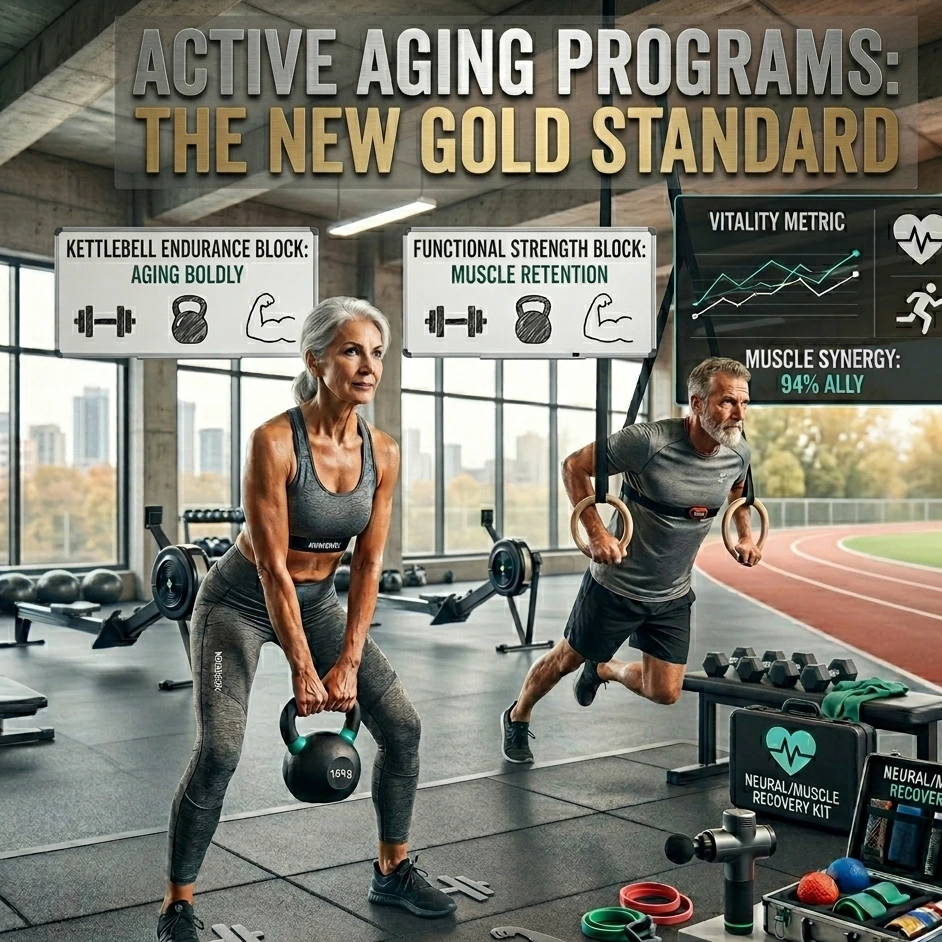
Chapter 1: Defining the Philosophy of Active Aging
For decades, the medical community viewed aging through the lens of "decline management." The goal was simply to treat diseases as they appeared. In the late 1990s, the World Health Organization (WHO) shifted this paradigm toward Active Aging.
Active aging is the process of optimizing opportunities for health, participation, and security in order to enhance quality of life as people age. It applies to both individuals and population groups. It allows people to realize their potential for physical, social, and mental well-being throughout the life course.
The "Active" in Active Aging
"Active" does not just mean physical labor or exercise. It refers to continuing participation in social, economic, cultural, spiritual, and civic affairs. A person who is retired but remains a caregiver for a grandchild or a volunteer at a library is "aging actively."
Chapter 2: The Biological Imperative – Physical Programming
The cornerstone of any active aging program is the maintenance of the biological machine.
1. Sarcopenia and Resistance Training
Sarcopenia is the age-related loss of skeletal muscle mass and strength. After age 30, adults lose 3% to 5% of their muscle mass per decade.
The Program Solution: Progressive Resistance Training (PRT). Programs now focus on compound movements (squats, deadlifts, presses) modified for senior physiology to maintain bone density and metabolic health.
2. Balance and Fall Prevention
Falls are the leading cause of injury-related death among adults age 65 and older.
The Program Solution: Proprioception training. This includes Tai Chi, which has been scientifically proven to reduce fall risk by up to 50% by improving "body awareness" in space.
3. Cardiovascular Elasticity
Aging often brings arterial stiffness.
The Program Solution: Zone 2 training—low-intensity aerobic exercise where one can still hold a conversation. This builds mitochondrial density without overstressing the nervous system.
Chapter 3: The Cognitive Frontier – Brain Health & Neuroplasticity
The fear of cognitive decline (Dementia and Alzheimer’s) often outweighs the fear of physical decline. Active aging programs are now incorporating "Brain Gyms."
Neuroplasticity in Later Life
The old myth that "you can't teach an old dog new tricks" has been debunked. The brain remains plastic—able to form new neural connections—well into the tenth decade of life, provided it is challenged.
The "Dual-Task" Approach
Cutting-edge programs utilize Dual-Tasking, which involves performing a physical task and a cognitive task simultaneously (e.g., walking on a balance beam while naming every capital city in Europe). This strengthens the link between the motor cortex and the prefrontal cortex.
Chapter 4: The Social Architecture of Longevity
The Harvard Study of Adult Development (the longest study on happiness) concluded that the single greatest predictor of health and happiness in old age is the quality of our relationships.
Combating the Loneliness Epidemic
Social isolation is statistically as dangerous as smoking 15 cigarettes a day. Active aging programs serve as a "Third Space"—a location outside of home and the doctor's office where seniors can find:
Intergenerational Programs: Programs that pair seniors with college students for housing or skills exchange.
Peer Support Groups: Navigating the grief of losing a spouse or the transition out of a 40-year career.
Chapter 5: Global Models of Excellence
How are different cultures handling the "Silver Tsunami"?
| Country | Focus Area | Program Highlight |
|---|---|---|
| Japan | Community Integration | Ikigai centers focusing on "reason for being" and light community labor. |
| Denmark | Infrastructure | "Co-housing" communities where seniors live in private units but share chores and meals. |
| Singapore | Education | The "Silver Academy," providing subsidies for seniors to attend university courses. |
| USA | Fitness | The "SilverSneakers" program, which integrates fitness into Medicare Advantage plans. |
Chapter 6: Technology and the Future of Active Aging
The "AgeTech" sector is exploding. We are moving toward a world where technology doesn't isolate seniors, but empowers them.
Wearable Monitoring: Smartwatches that detect atrial fibrillation (AFib) or notify emergency services during a hard fall.
VR (Virtual Reality): Used for seniors with limited mobility to "travel" the world or engage in immersive memory therapy.
Gerontechnology: Smart homes with floor sensors that detect changes in gait (a precursor to a fall) and automated lighting to prevent nighttime trips.
Chapter 7: Implementing an Active Aging Lifestyle (A 5-Step Action Plan)
Audit Your Movement: Aim for 150 minutes of moderate activity per week, but prioritize strength twice a week.
Audit Your Diet: Focus on protein intake (1.2g to 1.5g of protein per kilogram of body weight) to combat muscle wasting.
Find Your Tribe: Join a club or program where your presence is missed if you don't show up.
Adopt a "Newbie" Mindset: Pick up a hobby where you are a total beginner to spark neuroplasticity.
Environment Design: Adjust your living space for safety and accessibility before you actually need it.
Conclusion: The New Maturity
Active aging is not about a desperate pursuit of youth. It is about the radical acceptance of age while refusing to accept the limitations traditionally associated with it. By investing in these programs—physically, mentally, and socially—we ensure that our "golden years" are truly golden.
Suggested Further Reading & Resources
The Blue Zones by Dan Buettner
Outlive: The Science and Art of Longevity by Dr. Peter Attia
The WHO Global Network for Age-friendly Cities and Communities