How Much Protein Do You Really Need for Muscle Gain?
Introduction: Why Protein Matters for Muscle Gain
If you have ever stepped into a gym or searched for muscle-building advice online, one nutrient always dominates the conversation: protein. From protein shakes and bars to chicken breast meal plans and supplement advertisements, protein is marketed as the ultimate solution for gaining muscle. But despite its popularity, many people still don’t fully understand how protein works or how much of it the body actually needs.
Some gym-goers believe that eating massive amounts of protein will automatically lead to bigger muscles, while others worry that too much protein might harm their kidneys or cause unnecessary fat gain. These mixed messages create confusion, especially for beginners who are just starting their fitness journey. The truth lies somewhere in the middle, supported by science rather than hype.
Protein plays a crucial role in repairing and building muscle tissue after resistance training. When you lift weights or perform intense workouts, your muscle fibers experience microscopic damage. Your body responds by repairing this damage, making the muscles stronger and larger over time. Protein provides the amino acids necessary for this repair process. Without enough protein, muscle growth becomes slow, limited, or even impossible, no matter how hard you train.
However, protein alone does not guarantee muscle gain. The amount you need depends on several factors, including your body weight, training intensity, experience level, age, and overall calorie intake. Understanding these factors is essential if you want to maximize results without wasting money on unnecessary supplements or following extreme diets.
This article will help you understand how much protein you really need for muscle gain, why requirements differ from person to person, and how to approach protein intake in a balanced and sustainable way.
Understanding Protein and Muscle Growth
Protein is made up of smaller units called amino acids. These amino acids are responsible for building and repairing tissues throughout the body, including muscles, skin, enzymes, and hormones. When you eat protein-rich foods, your body breaks them down into amino acids, which are then absorbed into the bloodstream and used where needed.
Muscle growth occurs through a process called muscle protein synthesis. This process involves the creation of new muscle proteins to repair and strengthen muscle fibers damaged during training. At the same time, muscle protein breakdown occurs naturally as part of normal bodily functions. For muscles to grow, muscle protein synthesis must exceed muscle protein breakdown over time.
Resistance training acts as a trigger for muscle protein synthesis, but protein intake determines how effective that process will be. Without sufficient protein, the body cannot fully repair the damaged muscle fibers, limiting growth and recovery. This is why protein intake is often emphasized alongside strength training.
It’s also important to understand that muscle growth is not instantaneous. It happens gradually over weeks and months of consistent training and proper nutrition. Protein provides the raw materials, but your body still needs time, rest, and energy to build muscle effectively.
The Common Protein Myths in Muscle Building
One of the most widespread myths in fitness culture is that more protein always equals more muscle. While protein is essential, consuming excessive amounts does not automatically result in faster or greater muscle growth. Once your body has enough protein to support muscle repair and growth, additional protein is often used for energy or stored as fat.
Another common belief is that protein must come exclusively from animal sources to be effective. While animal proteins are considered complete proteins because they contain all essential amino acids, many plant-based protein sources can also support muscle growth when consumed in proper combinations and amounts.
Some people also fear that high protein intake damages the kidneys. For healthy individuals with normal kidney function, research has consistently shown that higher protein intake does not cause kidney damage. This concern mainly applies to individuals with pre-existing kidney disease, who should follow medical advice regarding protein intake.
Understanding these myths helps create a realistic and sustainable approach to protein consumption, preventing both under-eating and over-eating protein.
How Much Protein Does the Body Actually Need?
The protein needs of a sedentary person are very different from those of someone training regularly for muscle gain. General dietary guidelines often recommend a minimum amount of protein to prevent deficiency, but this amount is not sufficient for building muscle.
For muscle gain, protein requirements are higher because the body needs additional amino acids to repair and build muscle tissue after training. Scientific research suggests that individuals engaging in resistance training benefit from increased protein intake compared to inactive individuals.
Instead of focusing on a single universal number, protein needs are best understood as a range. This range accounts for differences in body size, training intensity, and goals. Most evidence-based recommendations suggest that protein intake should be calculated based on body weight rather than using a fixed daily amount for everyone.
This approach ensures that protein intake scales appropriately with the size of the individual, providing enough amino acids to support muscle growth without excessive intake.
Protein Requirements Based on Body Weight
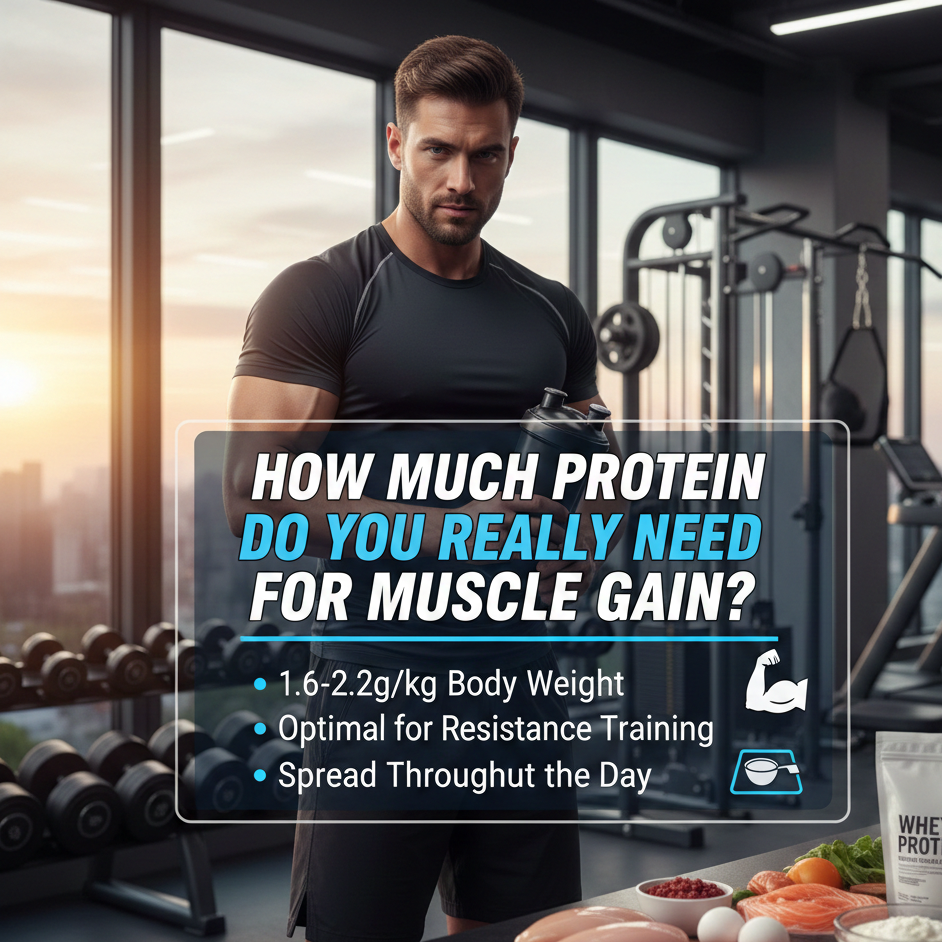
When it comes to muscle gain, protein intake is often measured in grams per kilogram of body weight. This method allows for more accurate personalization. Research commonly suggests that individuals aiming to build muscle should consume approximately 1.6 to 2.2 grams of protein per kilogram of body weight per day.
For example, someone weighing 70 kilograms would need roughly 112 to 154 grams of protein daily to support muscle growth. This range allows flexibility based on factors such as training volume, recovery ability, and calorie intake.
Beginners may find that the lower end of this range is sufficient, especially during the early stages of training when the body is highly responsive to resistance exercise. More experienced lifters, who require greater stimulus to promote growth, may benefit from protein intake closer to the higher end of the range.
It’s important to note that consuming more protein than this range does not necessarily lead to better results. Instead, consistency in training, adequate calorie intake, and sufficient rest play equally important roles in muscle development.
Does Protein Timing Matter?
Another widely discussed topic in muscle building is protein timing. Many people believe that consuming protein immediately after a workout is essential for muscle growth. While post-workout protein intake is beneficial, the overall daily protein intake matters more than precise timing.
After training, muscles are more sensitive to nutrients, making this a good opportunity to consume protein. However, studies show that as long as total daily protein intake is sufficient, muscle growth can still occur even if protein is not consumed immediately after exercise.
Spreading protein intake evenly throughout the day may offer additional benefits. Consuming moderate amounts of protein at regular intervals helps maintain a positive muscle protein balance, supporting continuous repair and growth. This approach can be especially useful for individuals training frequently or performing high-volume workouts.
Whole Foods vs Protein Supplements
Protein can be obtained from both whole foods and supplements. Whole foods such as lean meats, eggs, dairy products, legumes, and grains provide not only protein but also essential vitamins, minerals, and other nutrients that support overall health and performance.
Protein supplements, such as whey or plant-based powders, are convenient and can help individuals meet their protein requirements when whole food intake is insufficient. However, supplements should not replace a balanced diet. They are best used as a tool to complement whole food protein sources rather than as a primary source of nutrition.
Relying solely on supplements may lead to nutrient deficiencies and does not provide the same satiety and digestive benefits as whole foods.
The Role of Calories in Protein Utilization
Protein intake alone cannot drive muscle growth without sufficient calorie intake. Building muscle requires energy, and if calorie intake is too low, the body may use protein for energy rather than muscle repair.
A slight calorie surplus supports muscle gain by providing the energy needed for training and recovery. In this context, protein becomes more effective because it can be used primarily for building and repairing muscle tissue rather than being converted into energy.
Balancing protein intake with adequate carbohydrates and fats ensures that the body functions optimally, supporting both performance and recovery.
Protein Needs for Beginners vs Experienced Lifters
Protein requirements change as your training experience increases. Beginners often experience rapid strength and muscle gains during the early months of resistance training, a phase commonly referred to as beginner adaptation. During this stage, the body responds strongly to training stimulus, meaning that even moderate protein intake can support noticeable muscle growth.
For beginners, staying closer to the lower end of the recommended protein range is usually sufficient. Their muscles are highly sensitive to training, and the rate of muscle protein synthesis increases easily with consistent workouts. This makes it easier to build muscle without extreme dietary changes.
As training experience increases, muscle growth becomes more challenging. Intermediate and advanced lifters place greater stress on their muscles through heavier loads, higher volume, and more intense training sessions. Because the body adapts over time, it requires a stronger stimulus to trigger muscle protein synthesis. For this reason, experienced lifters often benefit from protein intake closer to the higher end of the recommended range.
That said, increased protein intake should be paired with intelligent training and proper recovery. Simply eating more protein without adjusting training variables will not overcome plateaus. Muscle gain remains a combination of progressive overload, nutrition, and rest.
Protein Requirements for Men and Women
There is a common misconception that men and women need drastically different amounts of protein for muscle gain. In reality, protein needs are determined primarily by body weight, lean muscle mass, and activity level, not gender.
Women generally weigh less and have lower absolute muscle mass compared to men, which naturally leads to lower total protein requirements in grams per day. However, when protein intake is calculated relative to body weight, the recommended range remains similar for both men and women.
Women who engage in resistance training benefit from adequate protein intake just as much as men. Protein supports muscle tone, strength development, recovery, and metabolic health. It also plays an important role in preserving lean muscle during fat loss phases.
Hormonal differences do not reduce the importance of protein for women. In fact, sufficient protein intake can help counter muscle loss associated with aging and support long-term physical health.
Protein Needs Across Different Age Groups
Age significantly influences how the body responds to protein intake. Younger individuals generally experience efficient muscle protein synthesis, meaning their bodies respond well to both training and dietary protein. As people age, this response becomes less efficient, a phenomenon known as anabolic resistance.
Older adults often require slightly higher protein intake to achieve the same muscle-building response as younger individuals. Resistance training combined with adequate protein becomes especially important for preserving muscle mass and strength with age.
For adults over the age of forty, maintaining muscle mass is crucial not only for appearance or athletic performance but also for functional independence and metabolic health. Protein intake in this group supports muscle maintenance, bone health, and overall vitality.
Regardless of age, consistent resistance training paired with appropriate protein intake remains one of the most effective strategies for preserving and building muscle.
Best Protein Sources for Muscle Gain
Protein quality matters as much as protein quantity. High-quality protein sources provide a complete amino acid profile, including essential amino acids that the body cannot produce on its own. These amino acids are critical for muscle repair and growth.
Animal-based protein sources such as lean meats, poultry, fish, eggs, and dairy products are rich in essential amino acids and are highly digestible. These foods are effective for supporting muscle protein synthesis and recovery after training.
Plant-based protein sources can also support muscle gain when consumed in sufficient amounts and proper combinations. Legumes, whole grains, nuts, seeds, and soy-based products contribute valuable protein along with fiber and micronutrients. Combining different plant protein sources helps ensure a complete amino acid profile.
Variety in protein sources not only improves nutritional balance but also supports long-term dietary adherence, making it easier to maintain consistent protein intake over time.
Digestion and Absorption: Why It Matters
Not all protein is absorbed and utilized by the body at the same rate. The digestion speed of protein affects how quickly amino acids become available for muscle repair. Fast-digesting proteins provide amino acids quickly, while slow-digesting proteins release them gradually over time.
The digestive process begins in the stomach and continues in the small intestine, where protein is broken down into amino acids. These amino acids are then transported into the bloodstream and delivered to tissues that need them.
Digestive efficiency varies between individuals based on factors such as gut health, enzyme production, and overall diet quality. Ensuring adequate hydration, fiber intake, and balanced meals can support optimal digestion and nutrient absorption.
Spacing protein intake throughout the day helps maintain a steady supply of amino acids, supporting continuous muscle repair and reducing muscle protein breakdown.
How Much Protein Per Meal Is Ideal?
Rather than consuming most of your protein in one or two meals, distributing protein intake evenly across meals may improve muscle protein synthesis. The body can only utilize a certain amount of protein at one time for muscle building, with excess amino acids being used for energy or stored.
Consuming moderate amounts of protein at each meal ensures that muscle protein synthesis is stimulated multiple times throughout the day. This approach supports recovery, reduces muscle breakdown, and promotes steady muscle growth.
Protein intake should be paired with carbohydrates and fats to support energy levels and hormone balance. Balanced meals also improve satiety, making it easier to maintain a consistent diet.
Protein During Bulking vs Cutting Phases
Protein needs can vary depending on whether your goal is muscle gain or fat loss. During a muscle-building phase, adequate protein supports muscle repair and growth while excess calories provide the energy needed for training.
During a fat loss phase, protein becomes even more important. Higher protein intake helps preserve lean muscle mass while the body is in a calorie deficit. It also increases satiety, making it easier to adhere to reduced calorie intake.
Maintaining sufficient protein intake during cutting phases helps ensure that weight loss comes primarily from fat rather than muscle, preserving strength and physical performance.
Can You Eat Too Much Protein?
While protein is essential, excessive intake beyond your body’s needs does not provide additional muscle-building benefits. Consuming extremely high amounts of protein may displace other important nutrients from the diet, such as carbohydrates and fats.
For healthy individuals, high protein intake is generally safe, but balance remains important. A well-rounded diet supports training performance, recovery, and overall health more effectively than an overly restrictive approach.
Listening to your body, tracking progress, and adjusting intake based on results are more effective strategies than blindly following extreme protein targets.
Conclusion: Finding the Right Protein Balance for Sustainable Muscle Gain
Protein plays a central role in muscle growth, recovery, and long-term physical strength, but it is not a magic solution on its own. Understanding how much protein you truly need helps remove confusion created by extreme advice and unrealistic fitness trends. Muscle gain is the result of consistent resistance training, adequate calorie intake, proper rest, and a balanced approach to nutrition in which protein supports, rather than dominates, the process.
For most people aiming to build muscle, protein needs fall within a realistic and manageable range that depends on body weight, activity level, and training experience. Eating more protein than your body can use does not accelerate muscle growth, while eating too little can slow recovery and limit progress. The key lies in meeting your individual needs consistently over time, not chasing excessive numbers.
Equally important is how protein fits into your overall diet. High-quality protein sources, whether animal-based or plant-based, contribute to muscle repair while providing essential nutrients that support overall health. Spreading protein intake across meals allows your body to maintain a steady supply of amino acids, supporting muscle recovery throughout the day rather than overwhelming the system in one sitting.
Muscle gain is a long-term journey, not a short-term experiment. Sustainable progress comes from habits that you can maintain for years, not weeks. When protein intake is aligned with smart training, proper recovery, and balanced nutrition, it becomes a powerful ally rather than a source of stress or confusion.
Ultimately, the best protein intake is the one that supports your performance, fits your lifestyle, and helps you feel strong, energized, and consistent in your training. Focus on progress, listen to your body, and remember that building muscle is about patience, discipline, and balance—not extremes.