Home Workout vs Gym Workout: Which Is Better for Fitness, Weight Loss, and Muscle Gain?
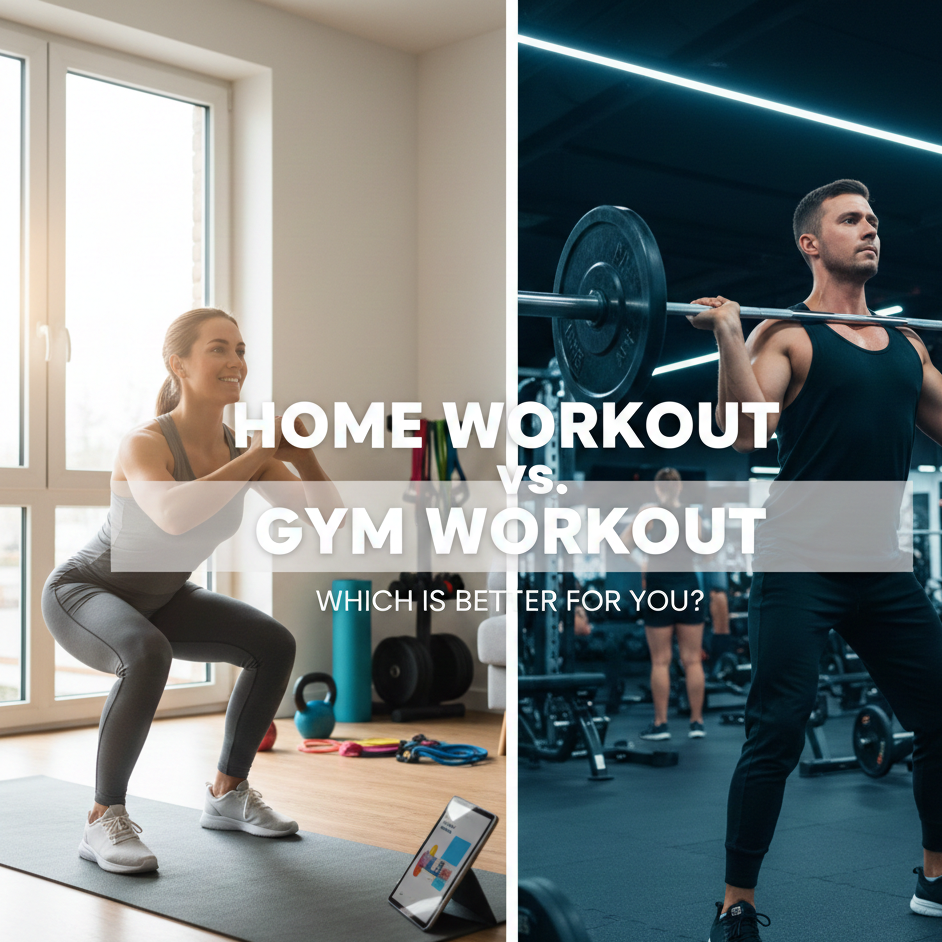
Home Workout vs Gym Workout: Which Is Better for You?
Introduction
Fitness has become an essential part of modern life. With increasing awareness about health, mental well-being, and longevity, more people are actively looking for ways to stay fit. One of the most common questions beginners and even experienced fitness enthusiasts ask is whether they should work out at home or join a gym.
Both options promise results, but the experience, progress, and long-term sustainability can be very different. Some people prefer the comfort and flexibility of home workouts, while others thrive in the structured and energetic environment of a gym. Choosing the wrong option can lead to inconsistency, frustration, or even quitting altogether.
This in-depth guide compares home workouts and gym workouts from every angle, including effectiveness, muscle growth, weight loss, motivation, time commitment, safety, and lifestyle compatibility. By the end, you will have a clear understanding of which option suits you best.
Understanding Home Workouts
A home workout refers to any physical exercise performed at home or in a personal space without relying on a commercial fitness facility. Home workouts can range from simple bodyweight routines to advanced strength training using basic equipment.
What Defines a Home Workout?
Home workouts are usually:
- Performed in a personal or private space
- Based on bodyweight exercises or minimal equipment
- Flexible in timing and duration
- Self-guided or app-based
They have gained massive popularity due to online fitness programs, virtual trainers, and social media workout challenges.
Types of Home Workouts
Home workouts are highly versatile and can be customized to suit different goals.
Bodyweight Training
Bodyweight workouts rely on your own body mass as resistance. Common exercises include:
- Squats
- Push-ups
- Lunges
- Planks
- Mountain climbers
These exercises improve strength, balance, and endurance without any equipment.
Cardio-Based Home Workouts
Cardio routines can be performed at home using limited space:
- Skipping rope
- High knees
- Jump squats
- Burpees
- Stair climbing
These workouts help burn calories and improve heart health.
Strength Training at Home
Strength training at home may include:
- Dumbbells
- Resistance bands
- Kettlebells
- Adjustable weights
With proper progression, home strength training can be effective for beginners and intermediates.
Flexibility and Recovery Workouts
Yoga, stretching, and mobility exercises are commonly practiced at home to improve flexibility and reduce stress.
Advantages of Home Workouts
Home workouts appeal to many people because of their simplicity and accessibility.
Convenience and Time Flexibility
One of the biggest advantages of home workouts is convenience. You can exercise:
- Early morning
- Late at night
- Between work breaks
There is no travel time, making it easier to stay consistent.
Cost-Effective Fitness Option
Home workouts require minimal financial investment. There are no:
- Monthly membership fees
- Transportation costs
- Locker or trainer fees
This makes home workouts ideal for students and budget-conscious individuals.
Comfort and Privacy
Many beginners feel self-conscious exercising in front of others. Home workouts provide:
- A judgment-free environment
- Freedom to learn at your own pace
- Reduced anxiety
This comfort often helps beginners build confidence.
Easy to Maintain Consistency
Since there are fewer barriers, people are more likely to stick to a routine when working out at home.
Limitations of Home Workouts
While home workouts are effective, they are not without challenges.
Limited Equipment Options
Without access to heavy weights and machines, advanced training becomes difficult over time. Progressive overload is harder to achieve.
Motivation Can Decline
Working out alone requires discipline. Without external motivation, many people struggle to stay consistent after the initial excitement fades.
Slower Muscle Development
Home workouts can build muscle, but gains may be slower for individuals aiming for significant size and strength.
Understanding Gym Workouts
Gym workouts are performed in a dedicated fitness facility equipped with machines, free weights, and structured workout zones. Gyms are designed to support various fitness goals, from weight loss to muscle building.
What Makes Gym Workouts Different?
Gym workouts usually involve:
- Professional-grade equipment
- Structured workout programs
- Access to trainers
- A focused fitness environment
The gym setting is often more intense and performance-driven.
Types of Gym Training
Strength Training
Gyms offer equipment for:
- Chest, back, legs, shoulders, and arms
- Free weights like barbells and dumbbells
- Resistance machines for isolation exercises
This allows precise targeting of muscle groups.
Cardiovascular Training
Gyms provide machines such as:
- Treadmills
- Stationary bikes
- Rowing machines
- Stair climbers
These machines support controlled cardio training.
Group Fitness Classes
Many gyms offer:
- HIIT classes
- Aerobics
- Functional training
- Dance workouts
- Group classes boost motivation and social interaction.
Advantages of Gym Workouts
Access to Advanced Equipment
Gyms provide machines that allow progressive resistance, which is essential for long-term muscle growth and strength gains.
Structured Environment
A gym creates a mental separation between daily life and fitness. This structured environment helps improve discipline and focus.
Faster Muscle Growth
With access to heavier weights and isolation exercises, gym workouts support faster muscle development compared to home workouts.
Professional Guidance
Trainers help with:
Proper exercise form
Injury prevention
Customized workout plans
This is especially beneficial for beginners.
Challenges of Gym Workouts
Financial Commitment
Gym memberships require monthly or yearly payments, which may not be suitable for everyone.
Time Investment
Travel time, waiting for equipment, and peak-hour crowds can make gym workouts time-consuming.
Intimidation Factor
Some people feel uncomfortable in gyms due to:
- Crowded spaces
- Experienced lifters
- Fear of being judged
Home Workout vs Gym Workout: Initial Comparison
At this point, it’s clear that both home workouts and gym workouts have strengths and limitations. The better option depends on personal preferences, goals, and lifestyle.
Muscle Gain: Home Workout vs Gym Workout
One of the biggest deciding factors for many people is muscle gain. While both home workouts and gym workouts can build muscle, the speed, efficiency, and long-term potential differ.
Muscle Growth with Home Workouts
Home workouts can absolutely help build muscle, especially for:
Beginners
People returning after a break
Individuals focusing on lean muscle and toning
Bodyweight exercises such as push-ups, squats, lunges, and planks activate multiple muscle groups at once. When combined with resistance bands or dumbbells, they can stimulate muscle growth through progressive overload.
However, as strength increases, it becomes harder to challenge muscles without heavier resistance. This can slow muscle growth over time.
Muscle Growth with Gym Workouts
Gym workouts provide a clear advantage for muscle gain due to:
- Heavy free weights
- Isolation machines
- Progressive loading options
- Advanced training techniques
Gym equipment allows precise targeting of muscle groups, which leads to faster hypertrophy and strength gains. For individuals aiming for visible muscle size, gym training is generally more effective.
Weight Loss and Fat Burning
Weight loss depends on calorie balance, consistency, and activity level. Both home and gym workouts can support fat loss when paired with proper nutrition.
Weight Loss with Home Workouts
Home workouts are effective for fat loss because they:
- Reduce barriers to consistency
- Encourage daily movement
- Allow short, frequent sessions
High-intensity home workouts can burn significant calories and improve metabolism. For people with busy schedules, home workouts often lead to better long-term adherence.
Weight Loss with Gym Workouts
Gym workouts offer more variety in fat-burning exercises, including:
- Cardio machines
- Resistance circuits
- High-intensity group classes
The gym environment often pushes people to work harder, increasing calorie burn. However, inconsistency due to time or cost can reduce effectiveness.
Motivation and Mental Discipline
Motivation plays a critical role in fitness success.
Motivation in Home Workouts
Home workouts require strong self-discipline. There is no external pressure, which means motivation must come from within.
People who succeed with home workouts usually:
- Set clear goals
- Follow structured programs
- Track progress regularly
Without structure, motivation may drop over time.
Motivation in Gym Workouts
Gyms naturally promote motivation through:
- Structured routines
- Social environment
- Visual progress cues
- Trainer accountability
Seeing others train can boost effort and consistency. This makes gyms especially helpful for people who struggle with self-motivation.
Time Management and Lifestyle Compatibility
Home Workouts for Busy Lifestyles
Home workouts fit easily into daily life. They are ideal for:
Students
Working professionals
Parents
People with irregular schedules
Short sessions can be just as effective as longer gym workouts when done consistently.
Gym Workouts and Structured Routines
Gym workouts work best for people who:
- Enjoy routine
- Prefer scheduled sessions
- Can commit specific time slots
While gym workouts may take more time overall, they often feel more focused.
Safety and Injury Prevention
Safety in Home Workouts
Home workouts can be safe when:
- Exercises are performed correctly
- Progression is gradual
- Warm-ups and cool-downs are included
However, lack of guidance can increase injury risk if form is ignored.
Safety in Gym Workouts
Gyms provide access to:
- Trainers
- Spotters
- Controlled machines
This reduces injury risk, especially for beginners lifting heavier weights.
Social Interaction and Accountability
Home Workout Environment
Home workouts are mostly solitary. While this suits some people, others may feel isolated.
Online communities and fitness apps can partially fill this gap.
Gym Community Experience
Gyms offer social interaction that:
- Builds accountability
- Creates motivation
- Encourages consistency
For many people, the gym becomes a second community.
Cost Comparison Over Time
Home Workout Costs
Home workouts require minimal investment:
- Exercise mat
- Resistance bands
- Basic weights
- Over time, this remains affordable.
Gym Membership Costs
Gym memberships involve recurring expenses. While they offer value, long-term costs can add up.
Which Option Is Better for Beginners?
Beginners often benefit from:
- Home workouts for confidence-building
- Gym workouts for guidance and structure
- The best option depends on comfort level and access to instruction.
Which Option Is Better for Long-Term Fitness?
Long-term success depends on sustainability. The best workout plan is one that:
- Fits your lifestyle
- Matches your goals
- Keeps you consistent
Some people thrive at home, others in the gym, and many use a mix of both.
Hybrid Training: Combining Home and Gym Workouts
A hybrid approach includes:
- Home workouts for flexibility
- Gym workouts for strength and progression
This method offers balance and reduces burnout.
Psychological Benefits Comparison
Both workout styles improve:
- Mental clarity
- Stress reduction
- Confidence
- Mood
However, gyms often enhance motivation, while home workouts promote comfort and relaxation.
Long-Term Results: What Happens After Months and Years?
When choosing between home workouts and gym workouts, many people focus only on short-term results. However, long-term consistency is what truly determines success.
Long-Term Results from Home Workouts
People who stick to home workouts over the long term often experience:
- Improved cardiovascular health
- Sustainable fat loss
- Better mobility and flexibility
- Increased daily activity levels
- Strong habit formation
Home workouts encourage a lifestyle-based approach to fitness. Instead of seeing exercise as a separate task, it becomes part of daily life. This mindset helps many people maintain fitness well into later years.
However, muscle gains may plateau without added resistance or structured progression.
Long-Term Results from Gym Workouts
Long-term gym training often leads to:
- Significant muscle growth
- Higher strength levels
- Improved bone density
- Athletic performance improvements
- Better body composition
Gym-goers who remain consistent tend to see visible physical transformation. The structured nature of gyms supports long-term progression, especially for strength and muscle-focused goals.
That said, burnout can occur if routines become repetitive or motivation fades.
Common Myths About Home and Gym Workouts
Myth 1: Home Workouts Are Not Effective
Home workouts can be highly effective when done consistently and progressively. Effectiveness depends more on effort and routine than location.
Myth 2: You Must Join a Gym to Lose Weight
Weight loss depends on calorie balance and activity level. Both home and gym workouts can support fat loss equally.
Myth 3: Gym Workouts Are Only for Bodybuilders
Gyms support a wide range of goals, including general fitness, rehabilitation, and mental well-being.
Myth 4: Home Workouts Are Only for Beginners
Many advanced athletes train at home using bodyweight mastery, resistance tools, and mobility-based programs.
Expert Perspective: What Fitness Professionals Recommend
Fitness experts generally agree on one principle:
The best workout is the one you can maintain consistently.
Professionals often recommend:
Home workouts for habit-building and beginners
Gym workouts for progressive strength and specialization
Hybrid training for long-term sustainability
Instead of choosing sides, experts encourage flexibility and adaptation based on lifestyle changes.
Home Workout vs Gym Workout for Different Goals
For Weight Loss
Both are effective when combined with proper nutrition.
For Muscle Gain
Gym workouts offer faster and more noticeable results.
For Mental Health
Home workouts provide calm and comfort, while gyms offer motivation and social energy.
For Busy Schedules
Home workouts are more practical.
For Beginners
Either option works, depending on confidence and access to guidance.
The Hybrid Approach: A Smart Long-Term Strategy
Many successful individuals combine both methods:
Home workouts on busy days
Gym workouts when time allows
Seasonal shifts between the two
This approach reduces burnout and increases adherence.
How to Decide What’s Best for You
Choose home workouts if you value:
- Flexibility
- Privacy
- Budget-friendly fitness
- Convenience
Choose gym workouts if you value:
- Equipment variety
- Structured routines
- Faster muscle growth
- Professional guidance
There is no wrong choice — only the choice that fits your life best.
Final Conclusion
Home workouts and gym workouts both offer powerful benefits. Home workouts provide convenience, flexibility, and sustainability, making them ideal for busy lifestyles and beginners. Gym workouts deliver structure, equipment, and faster physical transformation, making them ideal for muscle building and performance goals.
The real secret to fitness success is consistency, not location. Whether you train at home, in the gym, or use a combination of both, what matters most is showing up regularly and staying committed to your health.
Fitness is a journey, not a destination. Choose the path you can walk for life.
Frequently Asked Questions (FAQ)
Is a home workout as effective as a gym workout?
Yes, when done consistently and with proper intensity, home workouts can be very effective.
Can I build muscle without going to the gym?
Yes, especially as a beginner, though gym workouts allow faster and more advanced muscle growth.
Which is better for beginners, home or gym?
Both work well. Home workouts offer comfort, while gyms offer guidance.
How many days should I work out per week?
Three to five days per week is ideal for most people.
Can I mix home workouts and gym workouts?
Yes, a hybrid approach often produces the best long-term results.