Gym Equipment Guide for Beginners: Machines You Must Know
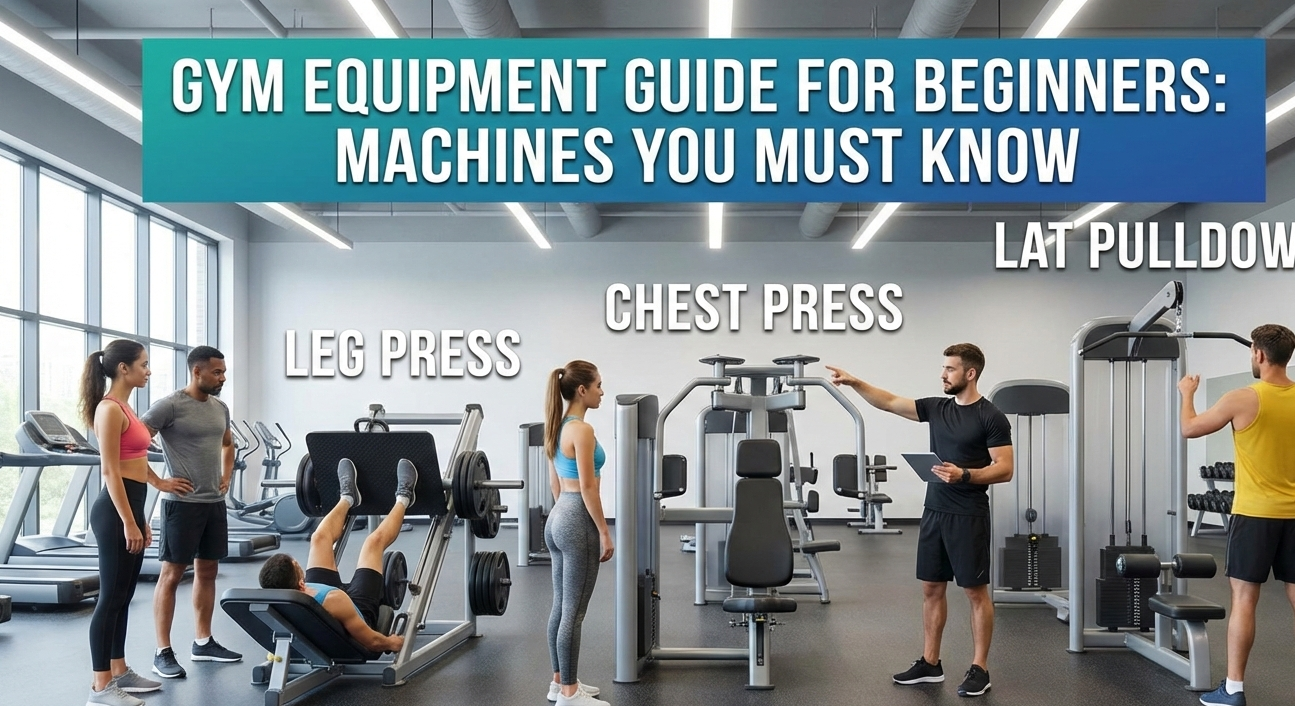
Gym Equipment Guide for Beginners: Machines You Must Know
Part 1: Understanding the Gym Environment and Why Machines Matter
Introduction: The First Day at the Gym
Walking into a gym for the first time can be overwhelming. The sound of weights clanking, people moving confidently between machines, mirrors everywhere, and rows of unfamiliar equipment can make any beginner feel nervous. Many people quit the gym not because they lack motivation, but because they feel confused and intimidated by the environment.
Gym machines are designed to make strength training safer, easier, and more structured, especially for beginners. Understanding how machines work, what muscles they target, and why they exist can completely change your gym experience.
This guide is written to help beginners feel confident, informed, and comfortable inside the gym. By the end of this article, gym equipment will no longer feel mysterious or intimidating.
Why Beginners Should Learn Gym Machines First
Gym machines are not just pieces of metal with cables and seats. They are tools designed to guide movement, support posture, and reduce the risk of injury.
For beginners, machines provide structure. They help your body learn correct movement patterns before progressing to more advanced exercises.
Machines are especially useful because they:
Guide your body through a fixed range of motion
Reduce the need for balance and coordination
Allow controlled weight adjustments
Help isolate specific muscle groups
Build confidence and consistency
When beginners skip learning machines and jump straight into advanced exercises, they often experience frustration, poor results, or injuries.
How Gym Machines Work
Gym machines use a system of pulleys, cables, weight stacks, and levers. When you move a machine, resistance is created through weights or plates. This resistance challenges your muscles, forcing them to contract and grow stronger over time.
Most machines are designed to target specific muscles while keeping the rest of the body supported. Seats, backrests, pads, and handles ensure proper alignment during movement.
Machines are especially helpful in teaching beginners how it feels to activate certain muscles. This awareness becomes important later when transitioning to free weights.
Understanding Muscle Groups Before Using Machines
Before using gym machines, it helps to understand basic muscle groups. This makes it easier to know which machine to use and why.
The body is commonly divided into:
Chest muscles
Back muscles
Shoulder muscles
Arm muscles
Leg muscles
Core muscles
Each machine usually focuses on one main muscle group and sometimes supports secondary muscles. Learning this connection improves workout effectiveness and prevents random training.
Cardio Machines vs Strength Machines
Gyms typically have two major equipment sections.
The cardio section includes machines designed to increase heart rate and improve endurance. These machines help with stamina, calorie burning, and cardiovascular health.
The strength section includes machines designed to build muscle and strength. These machines apply resistance to specific muscles.
Beginners often start with cardio machines to warm up and then move to strength machines for muscle training. Both play an important role in a balanced routine.
Treadmill: The Most Familiar Machine
The treadmill is often the first machine beginners recognize. It simulates walking, jogging, or running in a controlled indoor environment.
This machine is commonly used for:
Warm-up before workouts
Weight management
Improving endurance
Light recovery sessions
For beginners, walking on a treadmill helps prepare the body for strength training by increasing blood flow and loosening joints.
Using a treadmill properly involves maintaining good posture, avoiding excessive speed, and focusing on steady breathing.
Stationary Bike: Low Impact Cardio Support
The stationary bike is another beginner-friendly machine. It provides cardiovascular exercise without placing excessive stress on the joints.
This machine is especially helpful for:
People with knee discomfort
Overweight beginners
Low-impact cardio sessions
Improving leg endurance
Cycling allows beginners to build stamina gradually while protecting the joints from impact stress.
Why Strength Machines Are Essential for Beginners
Strength machines allow beginners to focus on muscle engagement rather than worrying about balance or complex movement patterns.
When using machines:
The body remains supported
The movement path is controlled
Muscle activation is more focused
Injury risk is lower
This makes machines ideal during the early stages of training when the body is still adapting to resistance exercise.
Chest Press Machine: Learning to Push Safely
The chest press machine is designed to strengthen the chest, shoulders, and arms. It mimics the pushing motion used in many daily activities.
For beginners, this machine helps develop upper body strength while maintaining proper shoulder alignment. The seat and back support ensure stability, allowing the chest muscles to work effectively.
Learning this machine builds the foundation for more advanced pushing exercises later.
Lat Pulldown Machine: Building Back Strength
The lat pulldown machine targets the muscles of the upper back. It helps improve posture, shoulder stability, and upper body strength.
Many beginners have weak back muscles due to long hours of sitting. This machine helps correct muscle imbalance and reduces the risk of shoulder discomfort.
Controlled movement and proper grip are essential when using this machine.
Leg Press Machine: Strengthening the Lower Body
The leg press machine is one of the most popular machines in the gym. It targets the thighs, glutes, and lower body muscles.
Unlike squats, the leg press provides back support and reduces balance demands. This makes it suitable for beginners learning how to apply force with the legs.
Proper foot placement and controlled movement are key to using this machine safely.
Seated Row Machine: Supporting Posture and Balance
The seated row machine strengthens the middle and upper back. It balances chest training and supports good posture.
This machine helps beginners feel how the back muscles contract and pull. It also improves shoulder stability and coordination.
A strong back is essential for long-term gym progress.
Why Confidence Matters in the Gym
Confidence plays a major role in gym consistency. Beginners who understand equipment are more likely to:
Stick to routines
Train regularly
Avoid embarrassment
Progress steadily
Knowledge reduces anxiety. The more familiar you become with machines, the more comfortable the gym environment feels.
The Importance of Starting Slow
One of the biggest mistakes beginners make is trying to do too much too soon. Gym machines allow gradual progress by adjusting resistance levels easily.
Starting with light weights helps:
Improve technique
Protect joints
Build endurance
Prevent burnout
Strength builds over time through repetition and patience.
Part 2: Strength Training Machines Every Beginner Should Understand
Entering the Strength Training Area
Once beginners move past the cardio section, they usually enter the strength training area. This is where most confusion begins. Machines look complex, people seem experienced, and there is often uncertainty about where to start.
Strength training machines are designed to help your muscles work against resistance in a safe and controlled way. For beginners, these machines act as teachers. They guide your movements, support your body, and help you understand how each muscle group works.
Learning these machines properly builds the foundation for long-term progress.
Chest Press Machine: Developing Upper Body Strength
The chest press machine is one of the most beginner-friendly machines in the gym. It focuses mainly on the chest muscles while also engaging the shoulders and arms.
When seated correctly, the backrest supports your spine, allowing you to push the handles forward in a controlled manner. This movement strengthens the pushing muscles of the upper body.
For beginners, this machine helps:
Build chest strength safely
Improve arm coordination
Learn proper pushing mechanics
It is important to move slowly and focus on controlled breathing rather than speed.
Pec Deck Machine: Understanding Chest Muscle Activation
The pec deck machine is designed to isolate the chest muscles. Unlike the chest press, which involves multiple muscle groups, this machine focuses more directly on chest contraction.
The seated position and arm pads guide your arms inward, helping you feel the chest muscles working. This awareness is valuable for beginners who are still learning how to activate specific muscles.
This machine teaches control and muscle engagement rather than heavy lifting.
Lat Pulldown Machine: Strengthening the Upper Back
The lat pulldown machine is essential for beginners because it targets the back muscles, which are often weak due to sedentary lifestyles.
Pulling the bar down toward the chest strengthens the muscles responsible for posture, shoulder stability, and upper body balance. A strong back supports nearly every movement in daily life and training.
Proper posture and controlled motion are more important than heavy weight when using this machine.
Seated Row Machine: Building Mid-Back Strength
The seated row machine focuses on the muscles between the shoulder blades and along the spine. These muscles play a major role in posture and upper body balance.
When beginners strengthen their back muscles, they often notice reduced shoulder discomfort and improved posture outside the gym as well.
Using this machine teaches proper pulling mechanics and helps balance pushing exercises like the chest press.
Shoulder Press Machine: Supporting Shoulder Development
The shoulder press machine helps strengthen the shoulder muscles in a controlled environment. The fixed movement path reduces strain on the shoulder joints.
Beginners benefit from this machine because it allows them to build shoulder strength without worrying about balance or coordination.
Good posture and slow movements help protect the shoulders and neck during this exercise.
Lateral Raise Machine: Shaping the Shoulders
The lateral raise machine isolates the side portion of the shoulder muscles. It helps create shoulder width and improves arm movement stability.
Beginners often struggle with free-weight lateral raises due to poor control. This machine provides guidance and stability, making it easier to learn proper movement.
Light resistance and controlled motion are key when using this machine.
Bicep Curl Machine: Learning Arm Isolation
The bicep curl machine focuses on the front muscles of the upper arms. It helps beginners learn how to isolate the biceps without swinging or using momentum.
By keeping the arms supported, the machine encourages proper muscle engagement and controlled movement.
This machine is especially helpful for beginners who want to improve arm strength and appearance.
Triceps Pushdown Machine: Strengthening the Back of the Arms
The triceps pushdown machine targets the muscles at the back of the upper arms. These muscles are involved in pushing movements and arm stability.
Strong triceps support shoulder health and improve overall upper body strength.
Beginners should focus on slow, controlled movements to feel the muscle contraction properly.
Leg Press Machine: Lower Body Power and Stability
The leg press machine allows beginners to train their lower body without worrying about balance or spinal positioning.
This machine strengthens:
Thigh muscles
Hip muscles
Glutes
Proper foot placement and controlled motion help ensure safety and effectiveness. Beginners should avoid locking the knees at the top of the movement.
Leg Extension Machine: Isolating the Front Thighs
The leg extension machine targets the front thigh muscles. It helps beginners develop leg strength and knee stability.
This machine is useful for learning how the thigh muscles contract independently. However, resistance should be kept moderate to protect the knee joints.
Slow movement and proper alignment are essential.
Leg Curl Machine: Strengthening the Back Thighs
The leg curl machine focuses on the muscles at the back of the thighs. These muscles support knee stability and balance lower body strength.
Beginners often neglect these muscles, leading to imbalance. Using this machine helps create balanced leg development and reduces injury risk.
Calf Raise Machine: Supporting Lower Leg Strength
The calf muscles support walking, running, and balance. The calf raise machine allows beginners to strengthen these muscles effectively.
This machine helps improve ankle stability and lower leg endurance. Slow and controlled movements help maximize muscle engagement.
Abdominal Crunch Machine: Building Core Awareness
The abdominal crunch machine supports the lower back while engaging the core muscles. It helps beginners strengthen their abdominal muscles without straining the spine.
Core strength supports posture, balance, and overall movement efficiency.
Proper breathing and controlled motion are important for effective use.
Why Machines Help Beginners Learn Muscle Control
Machines help beginners feel muscles working. This awareness is often missing when people start training without guidance.
By using machines:
Beginners learn proper movement patterns
Muscle engagement becomes clearer
Confidence increases
Progress becomes more consistent
This foundation is essential before transitioning to more advanced exercises.
Rest and Recovery Between Machines
Beginners often underestimate the importance of rest. Muscles need time to recover between sets and sessions.
Short rest periods allow the body to prepare for the next movement. Proper recovery helps prevent fatigue and improves performance.
Developing a Balanced Routine Using Machines
A balanced routine includes:
Upper body machines
Lower body machines
Core exercises
Cardio warm-up
Using a variety of machines ensures that all muscle groups are trained evenly, reducing the risk of imbalance or injury.
Mental Benefits of Learning Machines
As beginners become familiar with machines, anxiety decreases. The gym starts to feel like a familiar space rather than an intimidating one.
Confidence grows when you know what to do and how to do it correctly. This mental comfort plays a major role in long-term consistency.
Part 3: How to Use Gym Machines Properly, Build a Routine, and Progress Safely
Learning Proper Machine Setup
One of the most overlooked aspects of gym training is machine setup. Even the best machine will not work effectively if it is not adjusted to your body.
Most gym machines allow you to adjust:
Seat height
Backrest position
Handle height
Weight resistance
Before starting any exercise, take a moment to align the machine with your body. Your joints should move naturally without strain. Proper setup ensures comfort, safety, and better muscle engagement.
Beginners who rush into exercises without adjusting machines often experience discomfort or poor results.
Understanding Range of Motion
Every machine is designed with a specific movement range. Using the full range of motion helps muscles grow stronger and more flexible.
Partial movements reduce effectiveness and increase the chance of imbalance. However, beginners should not force extreme ranges if flexibility is limited.
Controlled, smooth movements are more beneficial than fast or jerky repetitions.
Breathing While Using Machines
Breathing plays a major role in strength training. Many beginners unknowingly hold their breath, which can cause dizziness or fatigue.
A simple breathing rule helps:
Exhale while pushing or pulling
Inhale while returning to the starting position
Proper breathing improves oxygen flow, endurance, and overall performance during workouts.
How Much Weight Should Beginners Use
Choosing the right resistance is one of the most important decisions for beginners.
A good starting point is a weight that allows you to perform:
10 to 15 repetitions
With proper form
Without strain
While maintaining control
If the movement feels too easy, the weight may be too light. If form breaks down or breathing becomes difficult, the weight is likely too heavy.
Progress should be gradual and consistent.
Structuring a Beginner Machine Workout
A simple machine-based workout helps beginners stay organized and confident.
A balanced session typically includes:
A light warm-up
Upper body machines
Lower body machines
Core exercises
Cool-down stretching
Beginners benefit from full-body workouts during the early stages. This approach allows muscles to adapt evenly and reduces soreness.
How Often Beginners Should Use Gym Machines
Consistency matters more than intensity. Beginners usually see the best results by training:
Three to five days per week
With at least one rest day between sessions
Rest allows muscles to recover and grow stronger. Overtraining often leads to fatigue and discouragement.
Recognizing Progress Beyond the Mirror
Many beginners rely only on visual changes to measure progress. While appearance does change over time, there are other important signs of improvement.
Progress can be seen through:
Increased strength
Better posture
Improved energy levels
Reduced soreness
Increased confidence
Focusing on these changes helps maintain motivation during slower phases.
Common Beginner Errors When Using Machines
Mistakes are part of learning, but awareness helps prevent setbacks.
Some common errors include:
Skipping warm-ups
Using excessive weight
Rushing through movements
Ignoring proper posture
Comparing progress with others
Correcting these habits early builds a strong foundation for long-term success.
Transitioning From Machines to Free Weights
Machines are excellent learning tools, but they are not the final step for everyone.
Once beginners:
Understand muscle engagement
Build basic strength
Develop confidence
Improve coordination
They may gradually introduce free weights into their routine. This transition should be slow and guided.
Machines remain useful even for experienced gym-goers and should not be abandoned completely.
Mental Growth Through Machine Training
Beyond physical changes, machine training helps beginners develop mental strength.
Over time, gym sessions teach:
Discipline
Patience
Focus
Consistency
These mental benefits often extend into daily life, improving confidence and self-control.
Staying Motivated as a Beginner
Motivation fluctuates, especially in the early weeks. Building a routine helps reduce reliance on motivation alone.
Simple strategies include:
Setting small goals
Tracking workouts
Celebrating strength improvements
Maintaining realistic expectations
Understanding gym equipment removes fear and builds consistency.
Creating a Long-Term Relationship With Fitness
The gym is not a short-term project. It is a long-term investment in health, strength, and well-being.
Learning machines properly helps beginners avoid burnout and injury. It transforms the gym from a stressful place into a familiar environment.
Consistency over time brings results that last.
Conclusion: Confidence Comes From Understanding
Starting the gym as a beginner does not have to be intimidating. Gym machines exist to guide, support, and teach your body how to move under resistance.
By learning how machines work, adjusting them properly, and using them with patience, beginners can build strength safely and effectively.
Gym equipment is not something to fear. It is a set of tools designed to help you grow stronger, healthier, and more confident.
The most important step is not lifting heavy weights or copying others. The most important step is showing up, learning the basics, and staying consistent.
Once you understand the machines, the gym becomes a place of progress rather than confusion.